How to Choose the Best Modular Trade Show Booth?
Choosing the best Modular Trade Show Booth begins with your objectives, not its appearance. A polished structure cannot rescue an unclear message. Define the audience, product, budget, storage needs, and measurable lead targets before comparing suppliers.
Industry evidence supports this disciplined approach. The Center for Exhibition Industry Research reported that U.S. business-to-business exhibitions generated approximately $97.3 billion in direct spending in 2022. UFI’s Global Barometer also documented continued recovery and stronger exhibitor activity after the pandemic. These reports show opportunity, but they do not guarantee results. Your booth still needs practical planning, trained staff, and relevant conversations.
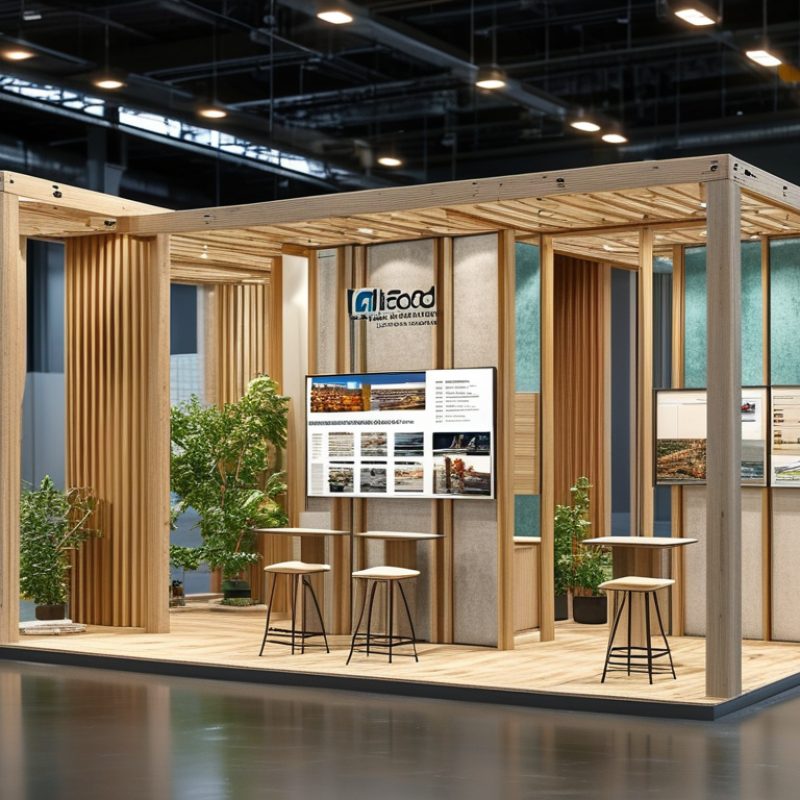
David DuBois, former IAEE President and CEO, described face-to-face marketing as “the most powerful medium for building relationships and conducting business.” A Modular Trade Show Booth can support that strength through reusable frames, adjustable graphics, integrated lighting, and simpler shipping. Picture a 10-by-20-foot space with a demo counter, two stools, hidden product storage, and a bright message visible from the aisle. Details matter.
But modular does not automatically mean better. A poorly designed system may look repetitive, feel unstable, or create difficult assembly days. That is easy to overlook. Review material quality, weight, warranty terms, fire-safety documentation, replacement graphics, and installation support. Ask for photographs from real events, not only polished renderings. Compare total ownership cost over several shows. The cheapest option may become expensive after one damaged panel.
A strong choice balances brand impact, visitor movement, adaptability, and operational reality. Sometimes, less is more.
Define KPIs Around CEIR’s 81% Buyer-Authority Attendee Benchmark
How to Choose the Best Modular Trade Show Booth?
Define KPIs Around CEIR’s 81% Buyer-Authority Attendee Benchmark
A modular trade show booth should support measurable buyer conversations, not only visual impact. CEIR reports that 81% of attendees influence or authorize purchasing decisions. That benchmark changes booth planning. Prioritize clear product pathways, private meeting space, and staff trained to qualify genuine opportunities. A bright wall may attract traffic. It may not create revenue.
Set KPIs before choosing the booth system. Track qualified conversations, decision-maker contacts, booked meetings, product demonstrations, and post-show opportunities. UFI’s Global Exhibition Barometer continues to identify exhibitions as important platforms for business recovery and customer engagement. Use that context carefully. Attendance alone is a weak success measure. A smaller booth can outperform a larger one when conversations are more relevant.
Tip: Place one direct question near the entrance, such as “Are you evaluating a solution this year?” Count useful answers, not casual scans. Keep one open area for demonstrations and one quieter corner for serious discussions. Modular construction supports future reuse, but flexibility can become clutter. I have seen teams add too many graphics and weaken the message. Review the layout from an attendee’s eye level. Then remove one element. Maybe two. Record leads immediately, define follow-up ownership, and compare results against the 81% authority benchmark after the event.
Compare Modular Systems by 3–5 Reuse Cycles, Weight, and Setup Time
How to Choose the Best Modular Trade Show Booth?
Compare modular booths through three to five real reuse cycles. CEIR’s The Role and Value of Face-to-Face report found that 81% of business-to-business exhibition attendees hold buying power. A reliable booth should support serious conversations without exhausting the team. Record the purchase price, freight, storage, labor, and replacement graphics after every event. Then divide the total cost by actual uses. A five-cycle promise can fail after one damaged frame or missing connector.
Weight needs a practical test. Weigh the complete shipment, including cases, lighting, graphics, tools, and spare parts. A lighter frame may create heavier replacement costs. Setup time also needs a clear measurement. Start when the cases reach the floor. Stop when graphics, shelves, lights, and cables are ready for visitors. Test with the actual crew, not a supplier’s best-case technician.
Three cycles can expose weak hinges. Five cycles reveal maintenance habits. Small delays matter. If a two-person team needs 90 minutes instead of 45, the labor difference grows quickly across several shows. UFI’s Global Exhibition Barometer shows that exhibitions remain a major business channel across international markets, so repeat performance deserves more attention than a single impressive launch. I would still question every estimate. Venues, freight rules, and unfamiliar crews can change the result.
How to Choose the Best Modular Trade Show Booth? - Compare Modular Systems by 3–5 Reuse Cycles, Weight, and Setup Time
Typical planning ranges for a 10 ft × 10 ft (3 m × 3 m) booth using standard graphics, lighting, and a basic counter. Weight excludes freight packaging and venue furnishings. | Modular System Type | Typical Structure | Approx. Booth Weight | Two-Person Setup Time | Typical Reuse Range | After 3 Reuse Cycles | After 4 Reuse Cycles | After 5 Reuse Cycles | Best Use Case |
| Fabric SEG Frame | Aluminum extrusion with silicone-edge fabric graphics | 55–90 kg
121–198 lb | 2–4 hours | 10–25 cycles | Excellent | Excellent to Good | Good | Frequent events where graphic replacement and a clean appearance are important |
| Tension-Fabric Tube Frame | Lightweight aluminum tube frame with stretch-fabric skin | 35–70 kg
77–154 lb | 1.5–3 hours | 8–20 cycles | Good | Good | Fair to Good | Portable displays prioritizing lower weight and faster installation |
| Aluminum Panel System | Heavy-duty aluminum profiles with rigid graphic or infill panels | 90–160 kg
198–353 lb | 4–8 hours | 15–30 cycles | Excellent | Excellent | Excellent to Good | Long-term programs requiring rigid walls, storage, shelving, or repeated reconfiguration |
| Hybrid Modular System | Aluminum frame combined with fabric walls, panels, counters, and lightboxes | 70–130 kg
154–287 lb | 3–6 hours | 10–25 cycles | Excellent | Good to Excellent | Good | Brands needing a balance of visual impact, modularity, storage, and portability |
| Folding-Frame Modular Kit | Collapsible frame with replaceable graphic panels and accessories | 20–45 kg
44–99 lb | 0.5–1.5 hours | 3–8 cycles | Good | Fair to Good | Fair | Short campaigns, regional events, and teams that need very fast self-installation |
How to interpret the table: Reuse-cycle performance assumes careful packing, dry storage, normal indoor trade-show use, and replacement of damaged graphics or small hardware when necessary. Actual weight and setup time vary with booth height, lighting, counters, shelves, flooring, graphics, venue rules, and crew experience.
Plan 8-ft Backwalls, 3-ft Side Rails, and Venue Height Restrictions
How to Choose the Best Modular Trade Show Booth?
Plan 8-ft Backwalls, 3-ft Side Rails, and Venue Height Restrictions
An 8-foot backwall creates a clear visual anchor in a standard inline booth. It also leaves space for focused graphics, lighting, and a small product shelf. The Center for Exhibition Industry Research reports that 92% of attendees seek new products or services. Your backwall should answer that need quickly.
A 3-foot side rail protects sightlines without closing the space. Keep it low and open near the aisle. Attendees need an easy entry path, not a narrow funnel. CEIR also reports that 81% of visitors hold purchasing authority. That makes accessible conversations more valuable than oversized decoration.
Check the venue manual.
Some halls restrict structures near fire equipment, doors, sprinklers, or neighboring exhibits. Ceiling heights can vary within one building. An 8-foot wall may fit the floor plan but still conflict with lighting rigs or hanging signs. Confirm the allowed height, setback, ballast rules, and electrical points in writing. A modular frame can adapt, but not always perfectly. I have seen teams approve attractive renderings before measuring the actual freight door. That mistake is expensive. Leave a few inches of tolerance, and test the assembled wall before shipping. UFI’s Global Exhibition Barometer continues to identify venue capacity and operating costs as important exhibition concerns, so practical planning matters as much as visual impact.
How to Choose the Best Modular Trade Show Booth?
Plan 8-ft backwalls, 3-ft side rails, and verify venue height restrictions before finalizing your modular booth layout.
An 8-ft backwall is a common inline-booth planning height, while 3-ft side rails help preserve visibility along the aisle. Venue height limits vary by facility and booth location; typical planning thresholds are often 8 ft, 12 ft, or 16 ft. Always confirm the approved height with the event organizer before ordering graphics, lighting, or overhead elements.
Evaluate Graphics, Lighting, Storage, and Lead Capture Within Your Budget
How to Choose the Best Modular Trade Show Booth?
A modular booth should make every budgeted element earn attention. Begin with graphics that explain one clear offer from several meters away. Use large type, strong contrast, and one memorable image. Small text often disappears under crowded hall lighting. The Center for Exhibition Industry Research reports that 81% of trade show attendees hold buying authority. Your message should respect their limited time. Test the artwork from the aisle, not only on a laptop.
Lighting can guide visitors toward demonstrations, while even illumination keeps product colors accurate. Adjustable LED fixtures usually offer more control than decorative lighting. Storage also matters. Hidden cabinets can protect samples, literature, cables, and staff bags. Without them, the counter becomes cluttered quickly. Measure the items before ordering the booth. I once saw a beautiful display fail because its storage could not fit basic shipping cartons.
Lead capture deserves equal planning. A simple form should record permission, interest, and a useful follow-up detail. CEIR research identifies learning about new products as a leading exhibit objective, so staff should connect captured data to specific product conversations. QR codes can support fast self-service, but they should not replace trained staff. Check internet access, offline functions, export options, and data security before the event. Keep the process short. A three-question form may outperform a twelve-question form. Budget for testing, replacement parts, and staff practice too. The cheapest booth is rarely the least expensive mistake.