Choosing the right Rattan Lighting supplier in China requires more than browsing attractive product photos. Buyers must examine craftsmanship, material sourcing, export experience, customization ability, and quality control. A well-finished rattan pendant should feel balanced, smell natural, and show consistent weaving around every frame. Small details matter.
This guide explores the top Rattan Lighting suppliers in China and explains how they compare across important purchasing criteria. It considers factory capabilities, design development, production capacity, certifications, packaging, lead times, and communication standards. Supplier claims can sound impressive. Evidence matters more.
The strongest manufacturers usually provide clear material specifications, factory images, samples, inspection procedures, and transparent quotations. Some also support hotel projects, retail collections, and private-label designs. However, no supplier is perfect. A company may offer excellent weaving but weaker packaging. Another may communicate quickly but provide limited customization. These gaps deserve attention.
The evaluation reflects practical sourcing concerns from an importer’s perspective. It focuses on suppliers that can demonstrate stable production rather than relying only on polished websites. Readers should still verify current certificates, sample quality, shipping terms, and production schedules independently. Conditions can change.
This comparison is designed to help architects, wholesalers, interior brands, and project buyers make more confident decisions. It does not treat low price as the main measure of value. Durable materials, reliable workmanship, responsive service, and consistent delivery often protect a project better than a cheaper quotation. The final choice should match the buyer’s market, design goals, and risk tolerance.
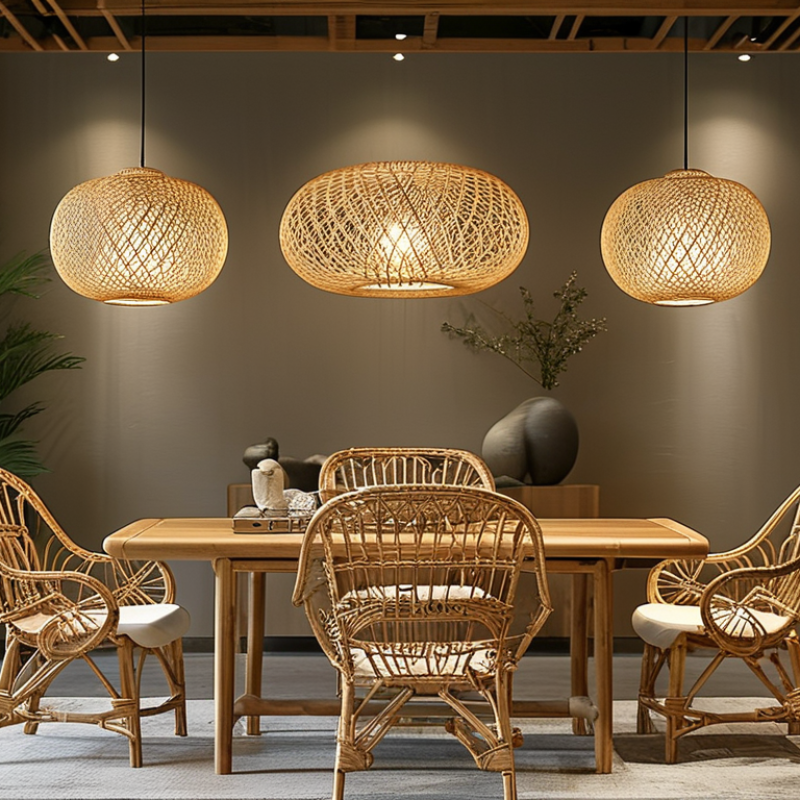
Rattan lighting is made by weaving or wrapping rattan around a metal, bamboo, or wooden frame. The material creates warm shadows when a bulb shines through its open pattern. Pendant lights, table lamps, and floor lamps commonly use this technique. Each piece may show slight differences in color and weave. That is part of its character.
China has a deep manufacturing network for rattan lighting. Many suppliers can coordinate material preparation, hand weaving, frame production, electrical assembly, and export packaging in one area. This can reduce communication gaps and support flexible order quantities. Buyers can also request changes to diameter, finish, cord length, shade shape, and carton protection. However, lower prices do not automatically mean better value. A supplier with weak quality controls may create uneven frames or fragile joints.
A reliable sourcing process should include a physical sample, factory photographs, and clear inspection records. Check the rattan for dryness, odor, insect damage, and loose strands. Test the frame for stability. Review wiring, plugs, heat resistance, and safety documents for the destination market. Ask how the supplier handles humidity during storage and shipping. Natural rattan is not perfectly uniform. Some uneven weaving will remain. Define acceptable variation before production, rather than rejecting normal handmade details later. Experienced suppliers usually explain these limits clearly and provide corrective steps when samples fail inspection. Practical communication matters more than polished sales language.
China’s rattan lighting supply chain is concentrated in several practical production regions. Guangdong is a major choice for lighting development, especially around Zhongshan and Foshan. Manufacturers there often combine woven rattan shades with metal frames, sockets, and export-ready packaging. This cluster supports faster sampling and broader component access.
Zhejiang, particularly areas connected with Anji, is known for bamboo and natural-fiber craftsmanship. Workshops there often focus on handwoven pendants, table lamps, and ceiling shades. Fujian also has experienced weaving communities, with strong skills in basket-making and coastal export production. Some suppliers in Shandong and Jiangsu offer similar products, but their rattan specialization can vary considerably. Regional labels are not enough. Factory visits still matter.
Tips: Ask where the rattan is sourced, dried, and treated. Request close-up photos of joints, weave tension, and edge finishing. Confirm moisture control before shipment. A sample may look excellent, yet production consistency can change. I have found that clear drawings and approved color samples prevent many avoidable disputes. Also check whether the workshop makes lighting products or only woven shells. That difference affects wiring quality, testing, and final assembly.
Identifying the top rattan lighting suppliers in China requires more than comparing online catalogs. A reliable supplier should provide a verifiable factory address, clear production photos, and evidence of export experience. Ask whether they weave rattan shades in-house or outsource this step. That detail affects consistency, pricing, and delivery control.
Request a physical sample before discussing large orders. Check the rattan’s dryness, weave tightness, frame stability, and surface finish. Place the shade near a warm bulb and inspect its color, odor, and heat response. Strong suppliers should explain material grading, moisture control, packaging tests, and replacement procedures. They should also provide accurate drawings, product dimensions, and electrical specifications from qualified technicians. Vague answers are warning signs.
Factory communication matters too. A capable team confirms lead times in writing and reports production changes quickly. Review inspection records, carton designs, and sample approval methods. Independent audits can add useful evidence, but they do not replace your own checks. No supplier looks perfect. A sample may have uneven weaving, even when the catalog appears polished. That is useful information, not an automatic rejection. Ask how the issue happened and how it will be corrected. Suppliers with consistent answers, transparent documentation, and practical quality controls are usually safer choices for long-term sourcing. Verify every claim.
China’s leading rattan lighting suppliers usually offer pendant lamps, chandeliers, table lamps, wall sconces, and floor lamps. Natural rattan creates warm shadows across dining rooms and hotel lobbies. Synthetic rattan suits humid areas and supports steadier color control. Grand View Research estimated the global lighting market at over USD 115 billion in 2022, with continued growth driven by decorative and energy-efficient products.
Customization is often the real difference between suppliers. Buyers can request shade diameter, basket depth, weave density, cord length, socket type, and ceiling-canopy finish. Many factories provide hand-drawn concepts, CAD files, 3D samples, and small prototype orders. Some also adapt designs for LED bulbs, dimming systems, and region-specific electrical requirements. Certification support may include CE, UKCA, UL, or other market-appropriate documentation, but buyers should verify every certificate independently.
Professional suppliers normally offer bamboo, seagrass, paper rope, metal, and fabric combinations. They may also provide water-based finishes, fire-retardant treatment, color matching, logo-free packaging, and export cartons with molded protection. IMARC Group’s home décor research identifies personalization and sustainable materials as important purchasing factors. The data sounds promising, though rattan-specific figures remain limited. That gap deserves caution. Ask for moisture tests, load checks, wiring photos, and pre-shipment inspection records before approving production.
Product coverage and customization services commonly available from China-based rattan lighting suppliers
The chart compares the main product categories and customization capabilities typically offered by Chinese rattan lighting manufacturers and exporters. Product breadth commonly includes pendant lights, table lamps, floor lamps, wall lights, chandeliers, and outdoor fixtures, while customization usually covers size, shape, color, rattan weave, electrical specifications, packaging, and private-label production.
What Are the Top Rattan Lighting Suppliers in China?
Comparing rattan lighting suppliers requires more than checking catalog photos. Inspect the rattan’s moisture level, weave tension, frame welding, socket fitting, and edge finishing. A reliable supplier should provide material specifications, inspection records, production photos, and traceable carton labels. Ask for a paid sample before discussing large orders. One attractive sample proves little. Lighting under HS 9405 in UN Comtrade records can help compare China’s export activity, but the code does not isolate rattan products. Treat trade data as market evidence, not supplier proof.
Pricing should include weaving labor, electrical components, packaging, testing, inland transport, and export documents. Compare identical specifications, not simply unit prices. The World Bank’s Logistics Performance Index 2023 evaluates customs, infrastructure, shipment quality, tracking, and delivery timeliness. Use these categories when assessing a supplier’s export reliability. Request recent shipping records, on-time delivery rates, and the name of the nominated forwarder. Claims about “fast delivery” need documents. A weakness remains: supplier-provided performance data may be selective.
Tips: Build a scorecard with quality, price, lead time, defect rate, and communication. Give each category a clear weight. Check three samples from different production batches when possible. Ask for product test reports and packaging-drop evidence. Do not rely on factory videos alone. A remote audit can miss humidity problems, loose wiring, or crowded workshops. Independent pre-shipment inspection costs extra, but it may reveal cheaper mistakes before loading.
Anonymous supplier benchmark for China-made rattan lighting manufacturers and exporters. Figures are indicative industry ranges for comparison and should be verified with current quotations, samples, audits, and shipping documents.
| Anonymous Supplier Profile | Typical Product Focus | Indicative MOQ | Indicative FOB Price* | Sample & Bulk Lead Time | Quality-Control Evidence to Request | Export & Compliance Capability | Packaging and Logistics | Best-Fit Buyer | Overall Evaluation |
|---|---|---|---|---|---|---|---|---|---|
| Profile A: Established Export Manufacturer | Rattan pendant lights, chandeliers, wall lights, and coordinated hospitality collections | 50–100 units per design | US$35–85 per one-light pendant, depending on size, finish, wiring, and packaging | Sample: 7–15 days Bulk: 30–45 days after approval | Pre-production sample, incoming-material inspection, in-line inspection, final inspection, carton drop testing, and photo-based inspection records | Strong when documented Usually experienced with commercial invoices, packing lists, HS classification, and standard export documentation | Individual polybag or paper protection, molded inserts or reinforced cartons, pallet loading available for larger orders | Importers, contract furnishing buyers, and hospitality projects requiring repeat production | ★★★★☆ Good balance of quality, capacity, and export reliability |
| Profile B: Design-Oriented Workshop | Handwoven statement pendants, natural-fiber lampshades, and customized decorative lighting | 20–50 units per design | US$45–120 per one-light pendant, with higher prices for complex hand weaving or custom dimensions | Sample: 10–20 days Bulk: 35–60 days | Approved master sample, weaving-density check, dimensional tolerance report, color-board approval, and electrical-component inspection | Verify before ordering Strong customization potential, but export procedures and product documentation may vary by workshop | Requires careful protection for irregular shapes; confirm inner-box design, moisture protection, and carton compression strength | Interior designers, boutique retailers, and buyers prioritizing appearance and customization | ★★★★☆ High design flexibility; production consistency must be monitored |
| Profile C: High-Volume Factory Supplier | Standardized rattan pendant lights, baskets, table lamps, and large-volume retail programs | 200–500 units per design | US$22–60 per one-light pendant for standardized models and larger purchase volumes | Sample: 7–12 days Bulk: 25–40 days | Golden sample, batch inspection, standardized work instructions, barcode control, carton measurement, and final random inspection | Generally scalable Better suited to container-volume orders and regular export schedules | Efficient master-carton packing, palletization, container loading plans, and better freight utilization for repeat SKUs | Chain retailers, distributors, and private-label buyers with predictable demand | ★★★★☆ Competitive pricing and capacity; less suitable for small custom orders |
| Profile D: Small-Batch Trading and Sourcing Supplier | Mixed rattan lighting collections sourced from several workshops and component suppliers | 10–30 units per design | US$40–95 per one-light pendant, depending on sourcing channel and order consolidation | Sample: 10–18 days Bulk: 35–65 days | Third-party pre-shipment inspection, supplier traceability, material declaration, electrical test reports, and written approval samples | Moderate; verify carefully Confirm whether the supplier is the exporter of record and whether documentation matches the actual manufacturer | Consolidated shipping may reduce small-order costs; confirm carton labeling, mixed-SKU packing, and damage responsibility | Start-ups, independent retailers, and buyers testing multiple designs with limited initial volume | ★★★☆☆ Flexible minimums, but traceability and consistency require stronger buyer controls |
| Profile E: Commercial Lighting Manufacturer with Rattan Capability | Rattan shades combined with metal frames, LED assemblies, ceiling fixtures, and project-specific lighting | 100–300 units per model | US$55–150 per complete fixture, depending on electrical configuration and certification requirements | Sample: 15–25 days Bulk: 40–70 days | Electrical safety test records, grounding and insulation checks, component traceability, photometric data where applicable, and production inspection reports | Strong for technical projects More suitable when buyers need formal electrical documentation and market-specific components | Higher-protection cartons, foam or molded pulp inserts, spare-component packing, and project-based shipping schedules | Hotels, restaurants, property developers, and commercial projects with technical specifications | ★★★★☆ Best for technical compliance and project coordination; usually higher priced |
Comparison guidance: Before selecting a supplier, compare the same product specification, including rattan type, dimensions, frame material, socket standard, cable length, plug type, finish, packaging, inspection standard, Incoterm, and destination market. Certifications such as social-audit reports are supplier-management evidence, while electrical compliance documents must match the exact finished product and target market.
*Pricing note: FOB ranges are indicative benchmarks for China-origin products and can change with material grade, handwork, order volume, exchange rates, packaging requirements, and electrical specifications. Freight, duties, taxes, testing fees, and tooling are not included.

© 2025 RWC. All Rights Reserved. | Privacy Policy | Contractor’s License Number: 13VH00710200 | Sitemap | Areas Served